
 800-948-3232
How to Label Boxes So Unpacking Isn’t a Nightmare
FREE Moving Quote
"*" indicates required fields
Label moving boxes on the top and two sides with the destination room, a short contents description, and a handling cue such as Fragile or This Side Up. Add one color of tape per room and a number tied to a written or digital inventory list, and anyone carrying boxes can match a carton to its room without opening it. Skip any of the three, and the same box gets checked, opened, or carried through the house more than once.
Packing goes fast, but unpacking can drag on for days when nobody can tell what’s inside a carton or which room it belongs in. Learning how to label moving boxes before you tape the last flap solves both problems: helpers set each box down once, in the right room, and you stop hunting through five identical cartons for the coffee maker. Our crews at A Father & Son Moving & Storage use the room, color, and number system below on every job we run for Los Angeles movers clients. Once you know how to label boxes for moving, the rest of the packing process gets a lot less stressful. Read through it, then let our team carry each container inside without a wrong turn.
Why Labeling Matters More Than You Think
Misplaced labels cause the worst moving-day stories: glasses shatter when someone stacks a box of hardcover books on top, and the same unlabeled carton gets opened three times before anyone finds the coffee maker. A clear label prevents every repeat trip, and it protects fragile items that would otherwise get buried under something heavier. Pairing your labels with a room-by-room packing plan gives every carton a clear home before you even start taping boxes shut.
Our crews watch that relief firsthand when a carton lands in its final spot on the first trip. Write big, stick on colored tape, and add a priority mark before the box leaves your hands. Then let our furniture movers Los Angeles carry delicate pieces straight to the right corner instead of setting them down twice. Clear tags cut the hours a crew spends walking boxes room to room, which keeps your bill closer to the estimate you were quoted.
Labeling Challenges Unique to a Los Angeles Move
A Los Angeles move brings its own pain points that a labeling system has to survive. Many high-rises in Downtown, Hollywood, and West Hollywood only allow move-ins during a two-hour elevator reservation, so boxes need to be labeled and sorted by room before the truck ever backs in — there’s no time to sort them on the spot once that window opens. Hillside homes in neighborhoods like Los Feliz and Silver Lake often mean carrying boxes up steep exterior stairs one load at a time, which is exactly when a smudged handwritten label becomes unreadable halfway up. And ink that looks clear at 8 a.m. can bleed and blur by mid-afternoon once boxes sit on a driveway through a 90-degree day, so waterproof markers and taped-down paper labels matter more here than in a cooler climate.
What Is the Best Way to Label Moving Boxes?
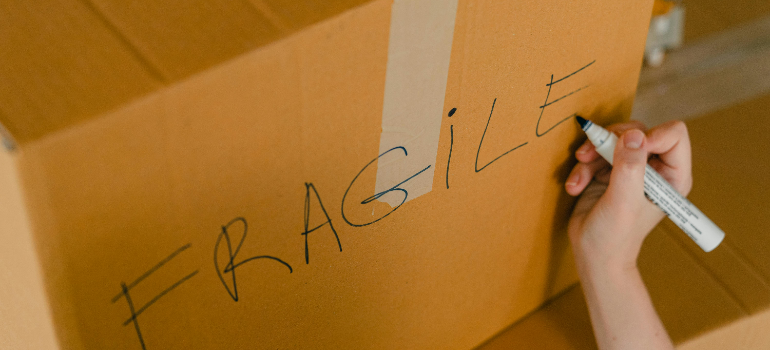
The best system combines a permanent marker, colored tape, and large lettering so no one has to guess. Write the destination room in letters at least two inches tall, then the general contents underneath — “Kitchen: Pots & Pans,” not just “Kitchen.” Place the label on the top of the box and on two adjacent sides, since boxes get stacked and turned during loading.
Pre-printed labels with the room name already in bold type save time if you’re packing more than a dozen boxes an evening; a marker works fine for a smaller move. Whichever tool you choose, label each box the moment you seal it — waiting until the end of a packing session means you’ll forget half of what’s inside. If you’d rather hand this step off entirely, our packing services in Los Angeles include labeling as your dishes and fragile items get wrapped, so every box is tagged correctly before it’s sealed.
Color-Coding Moving Boxes by Room
Assign one color to each room and stick a matching strip of tape or a dot sticker on every side of that room’s boxes. A simple starting palette:
- Red — kitchen
- Blue — bedrooms
- Green — bathroom
- Yellow — home office
- Orange — garage or storage boxes
Tape a matching color square on each doorframe in the new home, and even a helper who’s never seen the layout can match a box to a room without reading a word. Kids often want to pick their own room color, which keeps them involved and gives them one less thing to worry about on a stressful day. Labeling cartons by room and color takes an extra minute per box, but it saves hours of guesswork on move-in day.
Combine the color with the written label for double confirmation — color gets a box to the right doorway, and the label confirms what’s inside once it’s there. One exception to the color system: don’t label a box you’re keeping with you at all. See what to keep with you on moving day for what belongs in that bag instead of on the truck.
What Should You Write on a Moving Box Label?
A good carton box label always includes the room, the contents, and a handling note, in that order.
- Destination room — where this moving box belongs in the new home
- Two or three specific contents — “Winter Coats” or “Router & Cables,” not “Misc”
- A handling cue — Fragile, Heavy, or This Side Up
- An urgency tag — Open First or Store Later
Skip vague notes like “Misc” or “Stuff” — they tell your crew nothing once the box is sealed and stacked with twenty others. If a box holds anything you’d hate to replace, write the handling cue in a color that stands out from the rest of the label. Our guide on how to protect valuables during a move covers the packing methods that keep breakables intact before they’re ever labeled. This four-part format means anyone on your crew can prioritize unloading correctly without asking you a single question.

How To Label Boxes for Quick Identification?
Quick identification means anyone can match a box to its room at a glance, without opening it or reading a paragraph of handwriting. Combine three signals on every box: the color for the room, the written label for contents, and a number for cross-referencing a master list. Our short distance movers Los Angeles follow exactly this system on local jobs, since it lets a two-person crew empty a truck without stopping to ask which room a box belongs in.
Numbering moving boxes for a master inventory list
Number each box by room — Kitchen 1, Kitchen 2, Office 1 — and log the number with a one-line contents note in a shared spreadsheet or notes app. Anyone helping on moving day can search “phone charger,” find Office 3, and carry it straight to the desk instead of opening five others first. The same list prevents one of the most common storage mistakes after a move: boxes going into a unit unlabeled and unsearchable months later. Keep a printed copy of the list in your bag in case a phone dies on moving day.
Tools That Make Labeling Boxes Easier
Good box labeling doesn’t require expensive gear — a marker, tape, and a few minutes per box cover most of it.
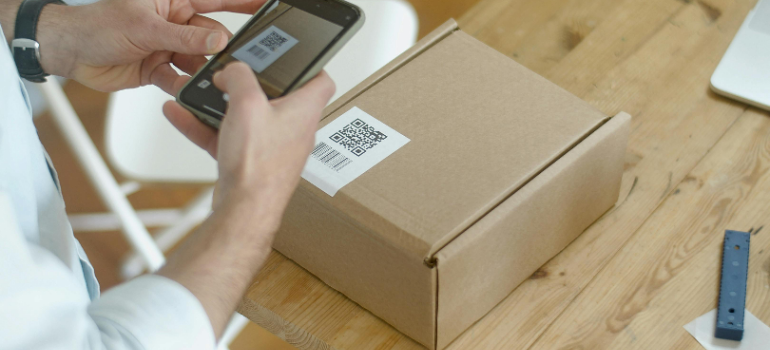
A few tools speed up labeling without adding much cost. Waterproof markers stay legible even if a box gets rained on during loading. Pre-printed label sheets with room names already in bold type cut writing time on packing day. QR code stickers linked to a photo inventory app let you scan a box and see its contents on your phone before cutting the tape.
Stock up on the basics — thick markers, colored tape, blank stickers — through your or your movers’ moving supplies list before your packing week starts. For additional pre-move organization tips, the moving prep guide from ATA Moving & Storage pairs well with a labeling system like this one.
Good Labels Make a Smooth Move
Clear labels turn unpacking from a scavenger hunt into a checklist: write the room, add the color, tag the priority, and every box lands where it belongs the first time. A Father & Son Moving & Storage builds this system into every move we run across Los Angeles, from the first box you pack to the last one our crew carries through your new front door. If you’d rather hand off the work, request a free quote and let our team label moving boxes, pack fragile items, and carry everything to the right room for you.
Frequently Asked Questions
What's the best system for labeling moving boxes?
Combine three things on every box: a marker label with the room and contents, a strip of color-coded tape for that room, and a number tied to a written or digital inventory list. Place the label on the top and at least one side so it's visible no matter how the box gets stacked.
How do you label boxes for quick identification during unloading?
Use large lettering — at least two inches tall — on the top and two sides of the box, and pair it with a color assigned to that room. A helper who has never seen your new home can match the color to a doorframe sign and carry the box straight there without reading anything.
What should you write on a moving box label?
Write the destination room, two or three specific contents, a handling cue such as Fragile or This Side Up, and an urgency tag like Open First if needed. Avoid vague notes like "Misc," since they don't tell your crew anything once the box is sealed.
Is color-coding or numbering better for labeling moving boxes?
Color-coding is faster to set up and works well for moves under about a dozen boxes, since a helper only needs to match a color to a room. Numbering with a master list works better for larger moves or storage, because it tracks exactly what's inside each box, not just where it goes.
Do movers charge extra for boxes that aren't labeled?
Most moving companies don't add a line-item fee for unlabeled boxes, but unlabeled cartons slow down loading and unloading, which can add to the billed time on a job. Ask your moving company directly, since policies vary by provider.
D
David Probasco


Bravo. I must start by saying my husband and I have moved from Denver to Philly, twice moved in Philly, Philly to Hollywood, Hollywood to DTLA and now back to ...
Contact Us
"*" indicates required fields
